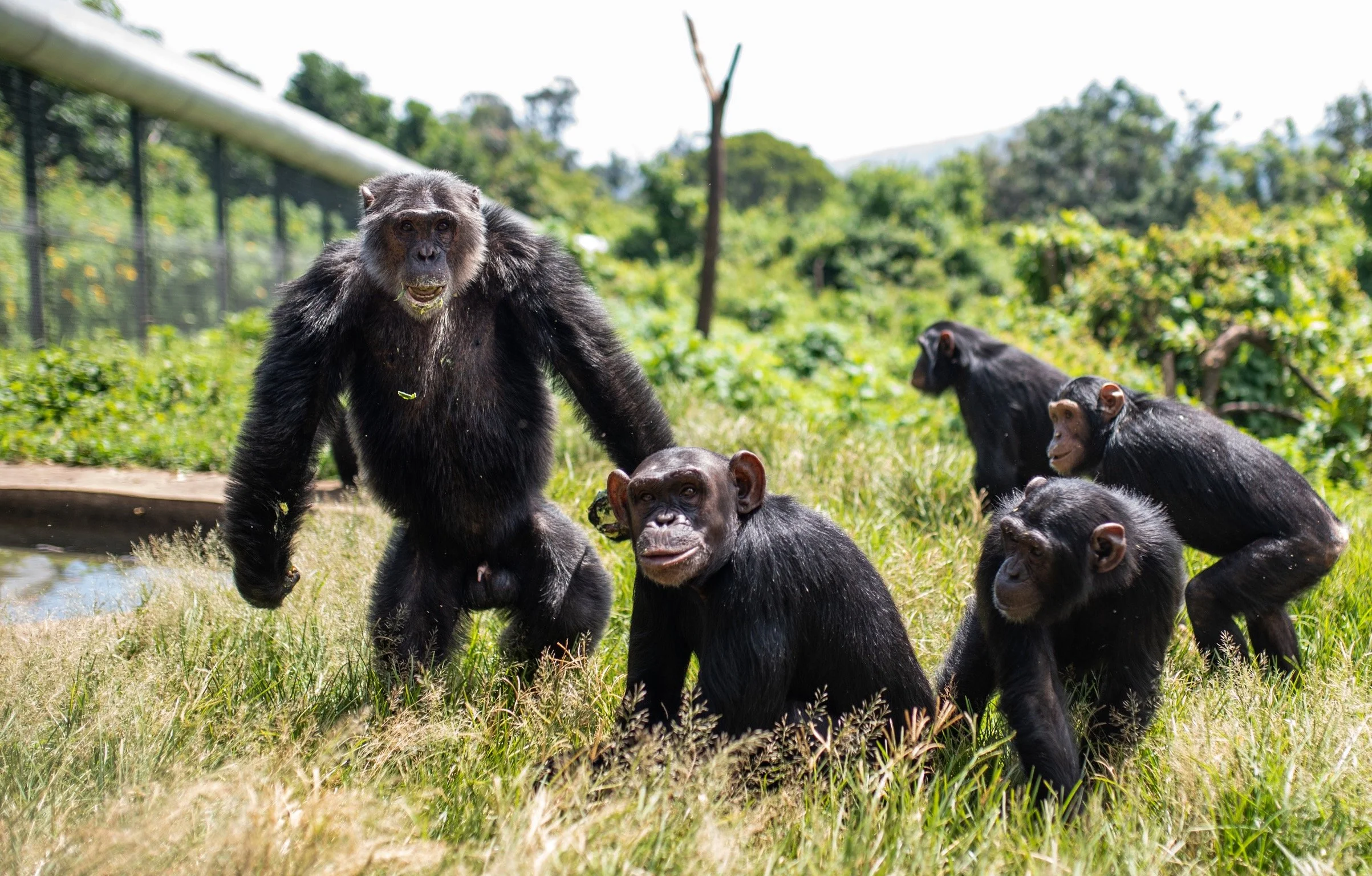
Chimpanzees at LPRC live on 170 acres of their natural forest habitat.
Thirty-four chimpanzees at a Texas laboratory will soon begin a journey many people thought would never happen.
On November 18, the National Institutes of Health announced that the last federally owned chimpanzees still living at an American research facility will begin moving to sanctuary next year.
Thirty-four chimpanzees remain at the Keeling Center for Comparative Medicine and Research in Bastrop, Texas. They will move to Chimp Haven, a 200-acre sanctuary in Keithville, Louisiana, which serves as the official retirement home for government-owned chimpanzees.
"Completing their transfers will fulfill N.I.H.'s commitment, announced in November 2015, to retire all N.I.H.-owned chimpanzees to sanctuary," said Dr. Jay Bhattacharya, the agency's director.
A long road
A federal law passed in 2000 requires the government to send retired chimpanzees to a sanctuary. In 2015, the NIH announced that it would no longer conduct or fund invasive research on chimpanzees. Since then, the agency has moved more than 200 chimpanzees to Chimp Haven.
But the NIH had said that several groups, including the chimpanzees at the Keeling Center, were too old or frail to be moved safely. Some lawmakers, veterinary experts and animal welfare groups challenged that view. Another group, the chimpanzees at the Alamogordo Primate Facility in New Mexico, had also been judged too sick to travel. In 2024, concerns about staffing at that remote facility led the agency to reverse course.
"This has been a long road and something that many people thought would never happen," Kathleen Conlee of Humane World for Animals told The New York Times. "It's a really historic moment. This will be the end of the government's use and confinement of chimps in labs."
What the Alamogordo chimpanzees showed us
Many of the Alamogordo chimpanzees are in their 50s and 60s and live with serious health conditions such as heart disease. Long-distance moves are risky for animals like these. Sadly, one elderly chimpanzee, Patricia, did not survive the journey.
The other 21 arrived safely, and the NIH then revisited the question of moving the Keeling Center chimpanzees. Dr. Bhattacharya noted that their health conditions raise the risk of adverse events during transport and adjustment, and said the NIH will carry out the transfers "with the chimpanzees' health and welfare at the forefront of every decision."
What comes next
Chimp Haven, which provides sanctuary to more than 300 chimpanzees from research facilities across the country, hopes to complete the transfers from Texas by the end of next year. Preparing means planning the complexities of safe transport, helping each chimpanzee settle in, and then providing lifelong care.
Chimp Haven issued a statement welcoming the NIH's latest decision: "We applaud the NIH’s decision to give these chimps the opportunity to experience sanctuary. While the transfers are not without risk for this medically fragile population, they also offer these former research chimpanzees the opportunity for a new beginning, with individualized care, opportunities to experience sanctuary at their own pace and meet new friends."
Why this matters to us
Lwiro Primates Rehabilitation Center cares for orphaned chimpanzees in eastern Democratic Republic of Congo. Their stories are different, but the belief behind them is the same: when human activity deprives chimpanzees of the life Nature intended, those chimpanzee deserve lifelong care and the chance to live as a chimpanzee among other chimpanzees. We celebrate this news with our colleagues at Chimp Haven.
Sanctuaries make these moments possible. To learn more about the journey ahead for these chimpanzees, visit Chimp Haven. To learn more about Lwiro Primates Rehabilitation Center, explore the Our Sanctuary page.
Sources: The New York Times, November 18, 2026; Chimp Haven blog, November 18, 2026.